

How to Elevate Simple Home Cooked Meals
Table of Contents
- The Secret to Elevating Everyday Cooking
- Start With the Sizzle: Heat Management and Searing
- How to Make Simple Meals Taste Expensive With Finishing Touches
- Simple Ways to Use Truffle Oil Without Overpowering Your Dish
- Gourmet Pantry Essentials for Beginners: What to Stock First
- Build Texture Contrast and a Balanced Plate
- Common Mistakes That Keep Meals Tasting Ordinary
- Your Next Step to Restaurant-Quality Dinners at Home
- Frequently Asked Questions
Last Updated: September 7, 2026
Most home cooks believe that making a meal taste expensive requires complicated techniques, rare ingredients, or hours of effort, but learning how to elevate simple home cooked meals is far more accessible. That belief is the single biggest barrier between a decent weeknight dinner and a plate that feels like it came from a restaurant kitchen. Learning how to elevate simple home cooked meals is less about doing more and more about doing a few specific things with intention. At Foodie Box Love, we curate artisan ingredients from small-batch makers, and we know how a single finishing oil or a pinch of flaky salt transforms a dish. The truth is that the gap between ordinary and memorable cooking comes down to heat, texture, and finishing touches, not culinary school training.
The Secret to Elevating Everyday Cooking
The secret is to stop cooking ingredients and start composing flavor profiles. Flavor is built in layers, and each layer needs a distinct purpose: a savory base, aromatics for depth, an acid for brightness, and a finishing element for texture or punch. When you approach a meal this way, even scrambled eggs become a study in balance. Mise en place matters here. Prep your aromatics, measure your seasonings, and have your finishing salts and oils within reach before the pan heats up. This simple organizational habit changes how calmly and deliberately you cook, which directly affects the final taste.
Start With the Sizzle: Heat Management and Searing
Most home cooks underheat their pans, and that single error explains why food steams instead of sears. Searing requires a hot pan, dry protein, and patience. When the protein hits the metal, it should sizzle immediately. If it does not, pull it out and wait. The Maillard reaction, which creates that deep, savory crust, only happens at high heat (peer-reviewed research).
Heat management is the culinary technique that separates home cooking from professional results. Use a heavy pan that holds heat well, and resist the urge to move the protein around. Let it develop a crust before flipping. Deglaze the pan afterward with wine, broth, or vinegar to capture the browned bits, which are pure umami.
How to Make Simple Meals Taste Expensive With Finishing Touches
Finishing touches are the fastest path to making simple meals taste expensive. A drizzle of good oil, a sprinkle of flaky salt, a few drops of citrus zest, or a scatter of fresh herbs transforms a finished dish in seconds. These final additions add brightness, texture, and aroma that the palate registers as complexity.
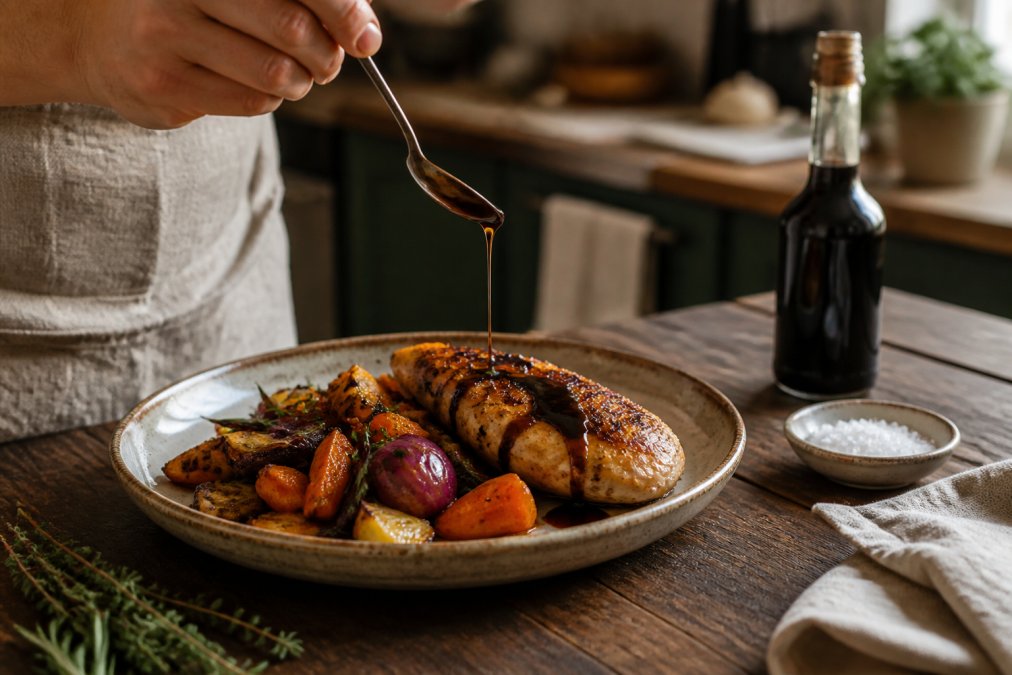
Think of finishing salt as a textural accent, not a seasoning. Flaky salt crystals crunch and dissolve slowly, delivering bursts of salinity that contrast with the dish. A high-quality vinegar adds acid balance that cuts through fat and wakes up dull flavors. This is where a curated pantry shines. Our Drizzle & Drip box delivers small-batch oils, vinegars, and sauces designed exactly for this purpose, making the finishing step effortless.

Simple Ways to Use Truffle Oil Without Overpowering Your Dish
Truffle oil is a polarizing ingredient, but its reputation for being overpowering is almost always a dosage problem, not a quality problem. The unique angle here is that you don't need truffle oil at all to achieve that 'expensive' umami depth. The budget-conscious luxury approach relies on building similar savory notes from cheap staples first, then using truffle oil as a final, optional accent.
The Mechanism: Most truffle oils are olive oil infused with a synthetic aromatic compound called 2,4-dithiapentane (PubMed). This compound is intensely volatile and dissipates quickly with heat. That's why the rule is always 'finish, don't cook.' Adding it to a hot pan destroys the volatile aromatics and leaves behind a bitter, oily residue.
The Budget-Conscious Alternative: The 'Poor Man's Truffle' Before you reach for a $15 bottle of truffle oil, build a savory base that mimics its earthy depth using ingredients you already have:
- Mushroom Powder: Grind dried porcini or shiitake mushrooms in a spice grinder until fine. A quarter-teaspoon stirred into mashed potatoes, scrambled eggs, or a pan sauce adds a deep, earthy, umami punch that rivals truffle oil at a fraction of the cost.
- Roasted Garlic Oil: Slow-roast a head of garlic in olive oil until the cloves are jammy and golden. The oil itself becomes sweet, nutty, and savory. Drizzle this over pasta or vegetables for a luxurious mouthfeel without the sharpness of raw garlic.
- Nutritional Yeast: A teaspoon of this deactivated yeast adds a cheesy, savory, almost nutty flavor to popcorn, roasted vegetables, or cream sauces. It provides the 'savory dust' effect that truffle oil is often used for.
If You Do Use Truffle Oil:
- Dosage: Use a toothpick or a dropper. One drop is often enough for a single serving. Two drops for a whole pot of mashed potatoes is a common starting point.
- Application: Whisk it into a vinaigrette after the emulsion is stable, or drizzle it over a finished dish just before serving. Never heat it.
- Pairing: It works best with foods that have a high fat content or a mild flavor: eggs, buttered pasta, risotto, or a simple white bean puree.
Gourmet Pantry Essentials for Beginners: What to Stock First
Stocking a gourmet pantry isn't about buying expensive specialty items. It's about acquiring tools and ingredients that physically change the outcome of your cooking through specific mechanisms. The unique angle here is focusing on kitchen tool upgrades that deliver outsized results for minimal cost, rather than just listing ingredients.
The Tool That Changes Texture: The Microplane A standard box grater is for shredding cheese. A microplane (a long, narrow rasp-style grater) is for creating fine, aromatic dust. This distinction matters. When you microplane a clove of garlic into a pan sauce, you're not adding chunks; you're creating a paste that disperses evenly, releasing alliinase enzymes that convert to allicin, the pungent, savory compound, uniformly throughout the dish (peer-reviewed research). The same tool transforms a hard cheese like Parmigiano-Reggiano into a fluffy snow that melts instantly into a risotto, rather than clumping. A microplane costs around $15 and is the single fastest way to add aromatic depth and textural finesse.
The Tool That Changes Crust: A Heavy-Bottomed Pan A thin stainless steel pan heats unevenly and cools instantly when food hits it. A heavy cast-iron or tri-ply stainless pan acts as a heat reservoir. The mass of the pan stores thermal energy, so when you add a protein, the pan's surface temperature doesn't drop below the Maillard reaction threshold (around 310°F). This is the difference between a deep, brown, flavorful crust and a pale, steamed surface. You don't need a full set. One 10-inch cast-iron skillet, properly seasoned, can handle searing, roasting, and even baking.
The Ingredient That Changes Acid Balance: Sherry Vinegar Most beginners stock balsamic or red wine vinegar. Sherry vinegar is the upgrade because it offers a complex, nutty acidity that brightens food without the sharpness of red wine vinegar or the sweetness of balsamic. Its acetic acid content (typically 7-8%) is high enough to cut through fat and balance salt, but its flavor profile is more nuanced. A teaspoon deglazing a pan after searing chicken will lift the browned bits (fond) into a quick pan sauce that tastes like it simmered for hours. gourmet seasoning blends.
The Ingredient That Changes Umami: Fish Sauce This is the secret weapon of professional kitchens. A single teaspoon of fish sauce (made from fermented anchovies) added to a pot of chili, a braise, or even a simple tomato sauce adds a depth of glutamates that rounds out flavors without tasting 'fishy.' It's the same mechanism as adding anchovy fillets to a puttanesca, the glutamates bind to receptors on your tongue, amplifying savory perception. It's a $5 bottle that lasts a year.
Your Starter Kit (Under $50 Total):
- Microplane: $15 - for garlic, ginger, citrus zest, and hard cheese.
- 10-inch Cast-Iron Skillet: $25 - for searing, roasting, and heat retention.
- Fish Sauce: $5 - for umami depth in any savory dish.
- Sherry Vinegar: $8 - for acid balance and deglazing.
Build Texture Contrast and a Balanced Plate
Texture contrast is one of the most overlooked elements of a satisfying meal. A plate of all soft foods, no matter how well seasoned, reads as monotonous. The palate craves variation in mouthfeel. This is why a crunchy garnish, a crispy edge, or a creamy element makes a dish feel complete.
Texture contrast techniques are simple to apply. Add toasted nuts or seeds for crunch. Sear a protein for a crisp crust against a tender interior. Include a raw element, like shaved fennel or crisp greens, for freshness. Balance the plate across color, temperature, and texture. A balanced meal should have something creamy, something crunchy, something bright, and something savory. This interplay is what makes a dish feel intentional and composed.
Common Mistakes That Keep Meals Tasting Ordinary
Several recurring mistakes keep home cooking tasting flat, and they are all fixable. The first is underseasoning at the right stages. Season in layers, not all at once at the end. The second is overcrowding the pan, which drops the temperature and causes steaming instead of searing. The third is neglecting acid. Many home cooks reach for more salt when a dish tastes dull, when a squeeze of lemon or a splash of vinegar would solve the problem.
The fourth mistake is ignoring the importance of fresh ingredients. Cooking from scratch with fresh herbs and seasonal produce delivers more flavor than any sauce or shortcut. Finally, many cooks skip the resting period for meat, which forces out juices onto the plate instead of keeping them in the meat. Fix these five issues, and your baseline cooking improves dramatically.
Your Next Step to Restaurant-Quality Dinners at Home
Mastering heat, texture, and finishing touches will carry you far, but the quality of your raw ingredients sets the ceiling. Sourcing exceptional oils, vinegars, and pantry staples is the difference between a good meal and a memorable one. This is where a curated approach pays off. Instead of guessing which small-batch producers are worth the premium, you can rely on a service that has already done the vetting. Foodie Box Love partners with passionate makers to bring artisan products directly to your door, with flexible subscription options of 1, 3, 6, or 12 months and nationwide free delivery.
Elevating simple home cooked meals is a skill built through practice, but the right tools make the practice more rewarding. Start with the fundamentals of heat and seasoning, then experiment with finishing oils and texture contrast. As you build confidence, explore new ingredients and let them inspire your cooking. A meal made with intention, quality ingredients, and a few solid techniques will always taste like more than the sum of its parts.
Frequently Asked Questions
What is the easiest way to make a simple meal taste gourmet?
Focus on finishing touches rather than complicated techniques. A sprinkle of flaky sea salt, a squeeze of fresh citrus, or a drizzle of high-quality olive oil right before serving adds immediate flavor and aroma. These ingredients brighten the dish and add texture that makes food taste more complex. Start with one new finishing ingredient, like a flavored vinegar or herb-infused oil, to see the difference it makes.
What are simple ways to use truffle oil in home cooking?
Truffle oil is potent, so use it sparingly and add it after cooking, since heat destroys its delicate flavor. Drizzle a few drops over scrambled eggs, mashed potatoes, or popcorn. Mix a small amount into warm pasta or risotto right before serving. You can also whisk it into a vinaigrette for salads. Start with one or two drops per serving to avoid overpowering the dish.
What gourmet pantry essentials for beginners should I buy first?
Begin with versatile items that add immediate flavor: a high-quality finishing salt like flaky sea salt, a good extra-virgin olive oil for drizzling, a flavored vinegar such as white balsamic, and a compound butter or flavored sauce. These pantry staples let you season and finish dishes with minimal effort. A curated box of artisan pantry items is a simple way to sample several quality products and find your favorites.
How do professional chefs elevate simple dishes so effectively?
Chefs rely on a few key techniques: proper seasoning at each stage, achieving a good sear for flavor development, and balancing textures and acidity. They also use aromatics like garlic and shallots as a flavor base. Finally, they finish dishes with fresh herbs, a pat of butter, or a splash of acid to brighten the flavors. You can apply these same methods at home with practice.